
Trees on Roofs & Structures
Controlled sectional removal—with rigging or a crane when needed—so no extra weight or impact lands on your home.
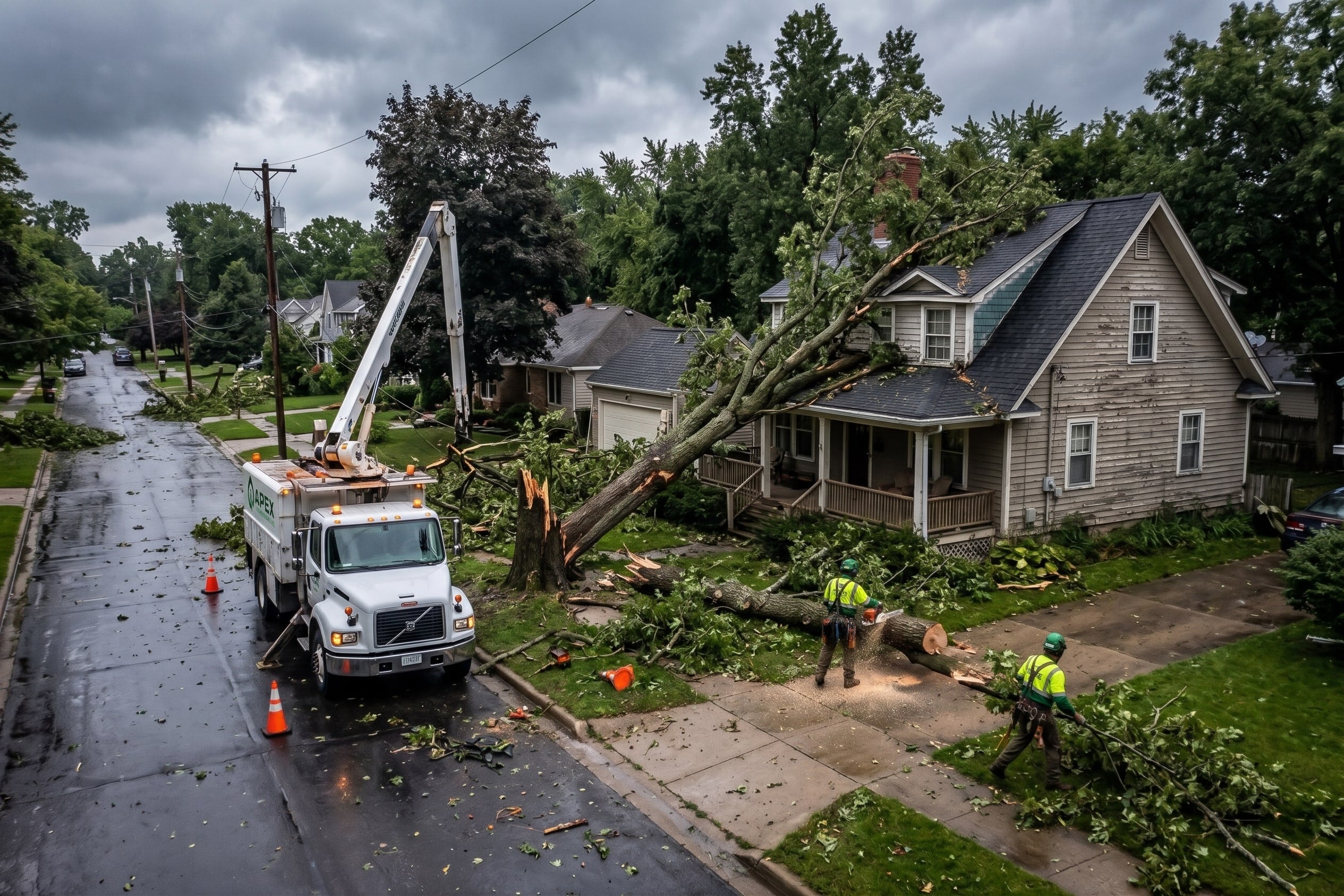
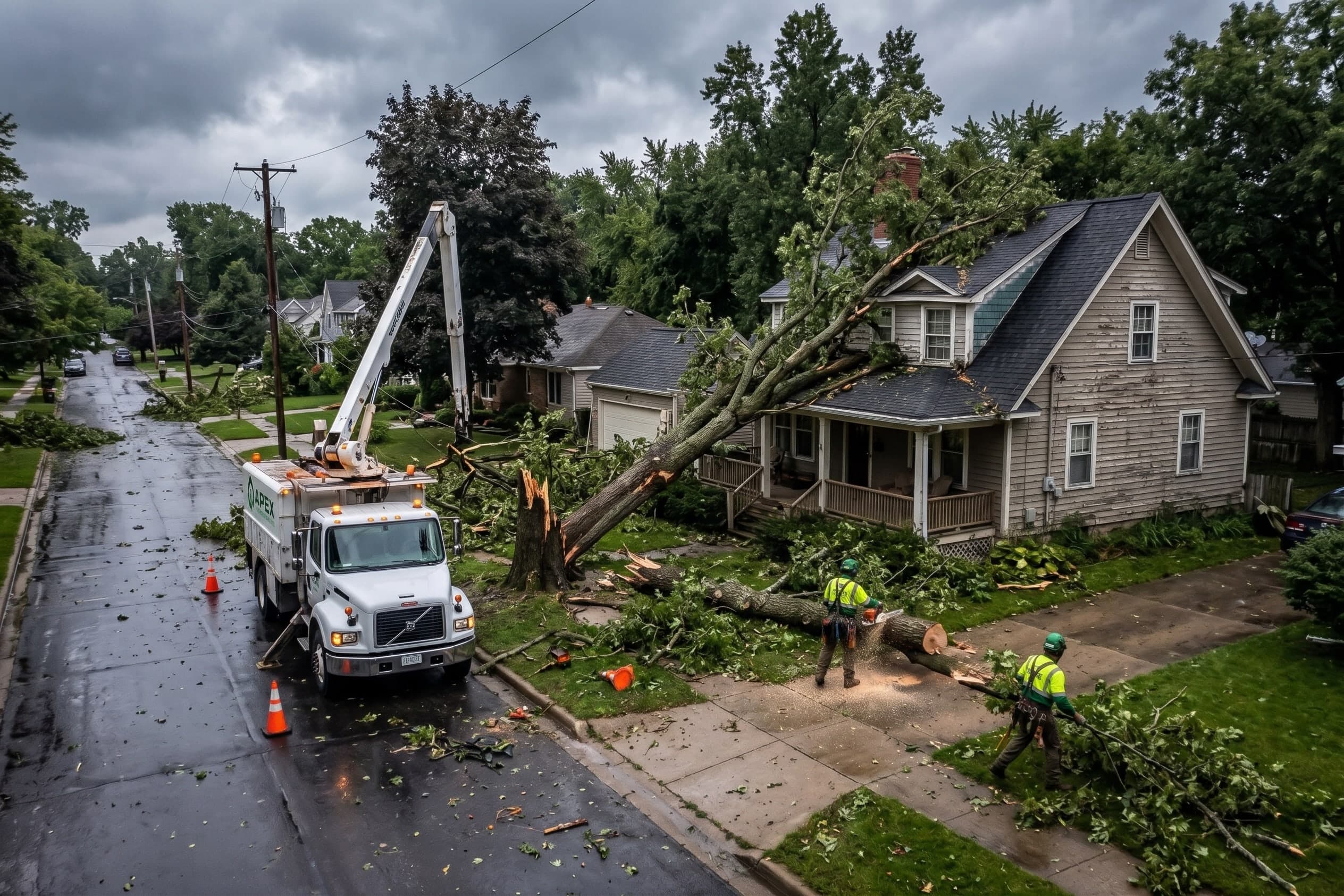
When a storm drops a tree on your roof, splits a limb over the driveway or uproots a tree in the yard, APPEX makes it safe, removes it and hauls the debris away. Emergency dispatch is available—call or text with photos and we respond as fast as it is safe to do so.
Storm-damaged trees are some of the most dangerous objects on a property. Wood that looks still can be loaded with stored energy, and a tree that survived the wind may still fail days later. The ISA's advice is simple: take safety precautions, assess the damage, resist the urge to do it yourself, and hire a professional.
Downed or Sagging Power Lines: Never approach a tree touching a power line. Keep everyone clear and call your utility company first.
Limbs Under Tension: Bent and trapped branches can spring back violently when cut. This is where most storm-cleanup injuries happen.
Hanging Limbs ("Widowmakers"): Broken limbs caught in the canopy can drop without warning—don't walk, park or play under them.
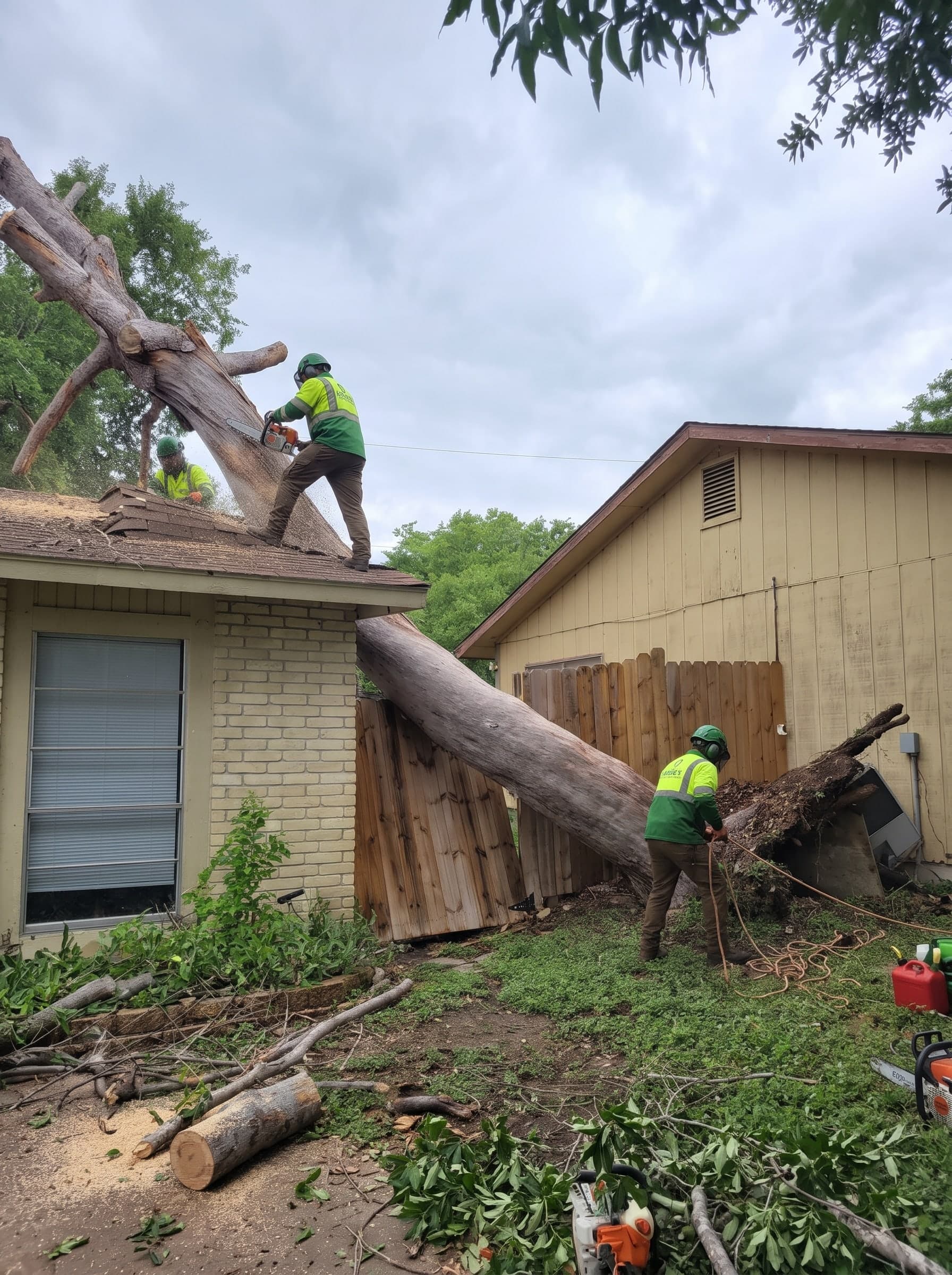
Trees Resting on Structures: A tree on a roof is still moving weight. Cutting it from below can drop it further into the house.
Cracked Trunks & Lifted Roots: A split trunk or a root plate lifting out of wet soil means the tree may still fall—have it assessed quickly.
"Take photos for your insurance, stay clear of the damage, and let a trained crew handle the cutting."
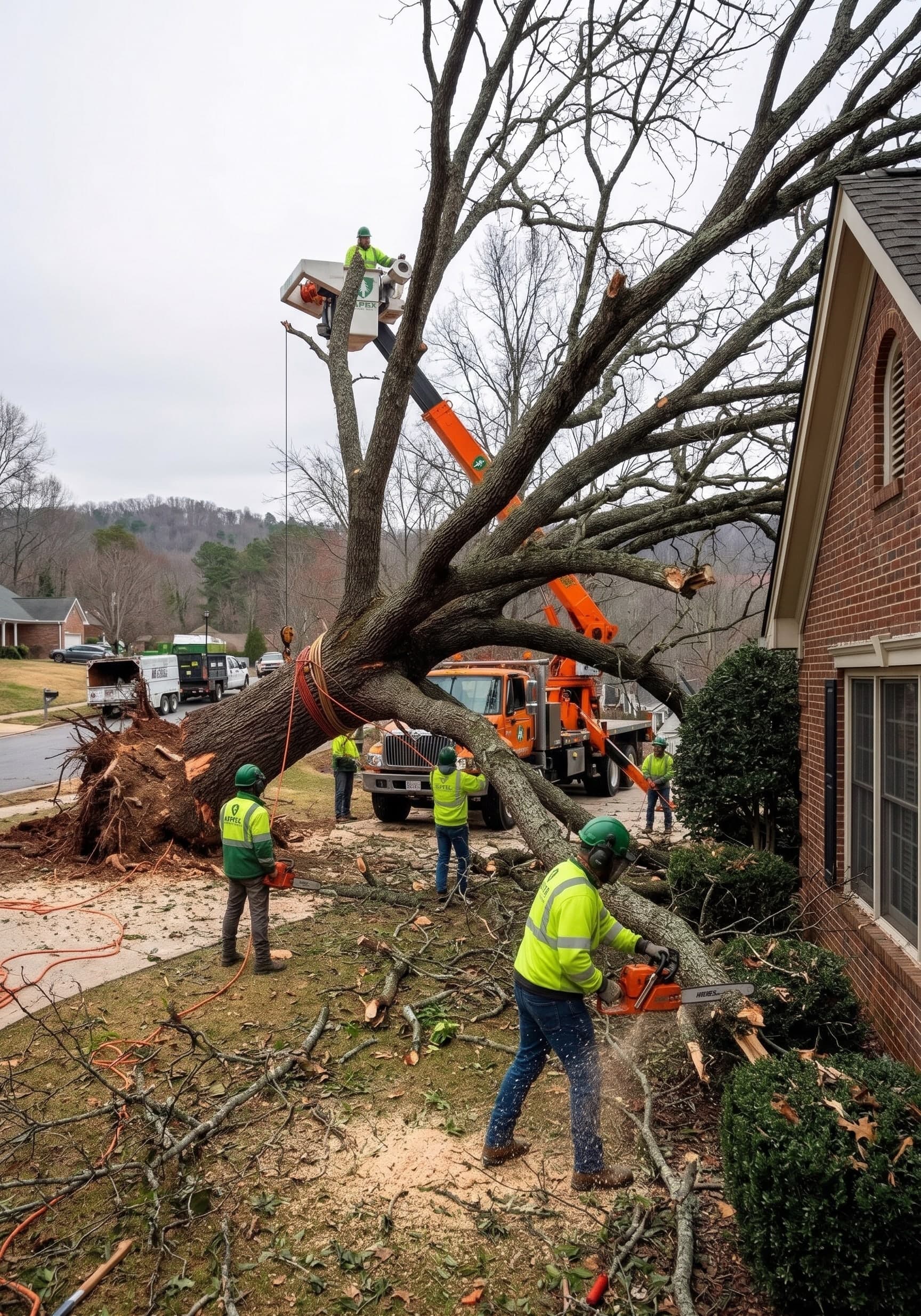
From one broken limb over the driveway to a large tree across the roof, APPEX has the climbers, rigging and equipment to handle it safely.
Controlled sectional removal—with rigging or a crane when needed—so no extra weight or impact lands on your home.
Cutting down storm-broken limbs caught in the canopy before they fall onto people, cars or roofs.
Removing trees that were blown over or left leaning after saturated soils and high winds.
Loading and hauling away limbs, logs and brush, then raking the area and clearing driveways and walkways.
Grinding the stumps of storm-felled trees 8–12 inches below grade so the area can be backfilled and replanted.
Photos and a written estimate of the tree work you can share with your insurance company.
Send photos of the damage and your address to (682) 359-3108. If a tree is on a power line, call your utility first.
We assess the hazards—tension, hanging limbs, structural contact—and plan how to take the tree down without causing more damage.
Our crew removes the tree in sections, lowering heavy pieces with rigging or lifting them clear with a crane when needed.
We chip or haul away the debris, rake the area and blow off driveways and walkways so your property is usable again.
Storm work is where shortcuts get people hurt and houses damaged. APPEX carries General Liability and Workers' Compensation insurance, follows ANSI A300 standards and ISA guidance, and brings the climbing gear, rigging and equipment the job calls for—so the cleanup never adds to the damage.
Storm Damage Facts
Storm-damaged trees are dangerous to approach and even more dangerous to cut. The International Society of Arboriculture (ISA) recommends a clear order of steps after a storm, and the National Weather Service issues the severe-weather warnings that tell North Texans when to prepare. These facts explain how to stay safe and protect your property.
Fact 01 of 05
The ISA lists 4 steps: take safety precautions, assess the damage, resist the urge to do it yourself, and hire a professional arborist. Stay away from damaged trees until a professional has checked them, and keep children and pets clear of the area.
Fact 02 of 05
According to ISA storm guidance, storm cleanup combines working at height, freeing fallen tree parts from buildings or utility lines, and running cutting machinery. Limbs bent under tension can spring back unexpectedly when cut, which is why trained crews release that tension in a planned order.
Fact 03 of 05
Stay away and call your electricity provider. According to the ISA, downed lines or lines in contact with trees may still be conducting electricity. Tree crews work on the tree only after the utility has made the lines safe.
Fact 04 of 05
Yes. According to the ISA, a tree and landscape appraisal can put a dollar value on your loss, including debris removal and repairs, and storm damage can count as a casualty loss. Photograph the damage from several angles before any cleanup and contact your insurer early.
Fact 05 of 05
The National Weather Service Fort Worth/Dallas office issues severe thunderstorm and tornado warnings for North Texas, and the Storm Prediction Center publishes severe-weather outlooks days ahead. Checking them lets you move vehicles and plan inspections of large trees before storms arrive.
FAQ
Still have a question?
Call or message our team, Mon–Sat 8:00 AM–5:00 PM.
Follow the ISA's four steps: take safety precautions, assess the damage, resist the urge to do it yourself, and hire a professional. Keep everyone away from the tree, stay clear of any downed or sagging power lines and call your utility, then call or text APPEX with photos.
Tree too far gone? Learn about our safe removal process.
Learn MoreBrush piles and limb heaps gone for good.
Learn MorePrevent the next storm's damage with deadwood removal and crown thinning.
Learn More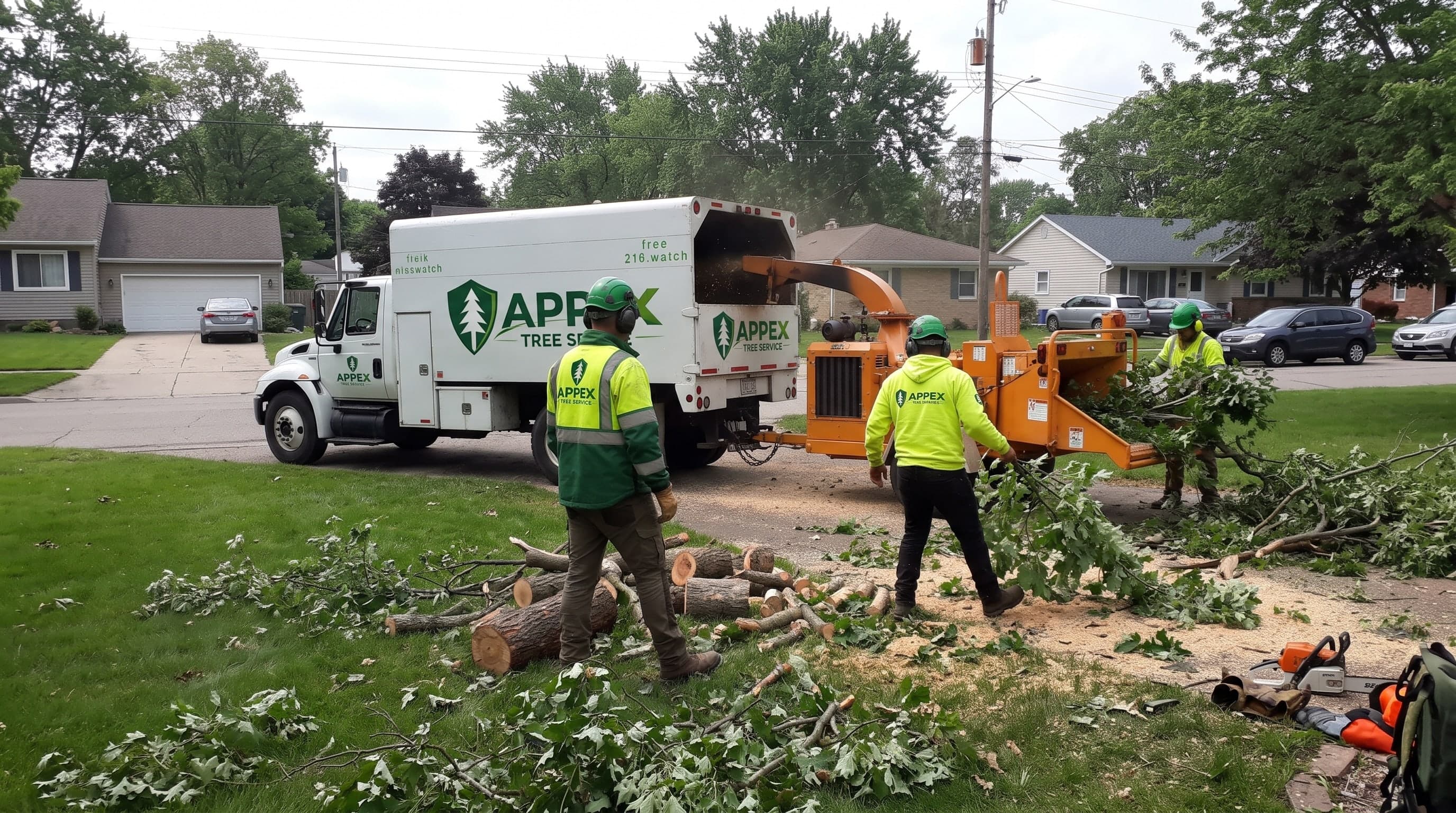
From Fort Worth, Arlington and Burleson to our expanded service areas across East Texas, APPEX clears storm damage safely and leaves your property clean.
Stay safe, take photos, and send them our way.